Clean drinking water is something most of us take for granted until there’s a reason to question it. Perhaps tap water has an odd aftertaste, a kettle develops stubborn mineral deposits, or you’ve recently moved into a home with a different water supply. These little signs can prompt an important question: is the water coming from the tap as good as it could be?
The answer depends on where your water comes from and what’s in it. Fortunately, modern filtration offers several ways to address common water quality concerns. One approach uses multiple filtration stages, with each component designed to handle a different part of the treatment process. Understanding how these systems work makes it easier to choose equipment that suits your household instead of paying for features you may not need.
Why Water Sometimes Needs More Than One Filter
Water can contain a mixture of substances, including suspended particles, naturally occurring minerals, disinfectants, and other contaminants. Municipal supplies are generally treated and monitored, but water quality can still be affected by distribution systems and household plumbing. Private wells have different considerations because owners are typically responsible for arranging appropriate testing.
A single filter may work well for one concern but do little for another. For example, a sediment filter can trap sand and rust particles, yet it won’t reliably remove dissolved salts. Activated carbon can improve chlorine taste and odor, but it isn’t designed to solve every chemical or microbiological problem.
That’s where multi-stage treatment becomes useful. Instead of expecting one cartridge to do everything, a system combines different technologies to address specific water quality issues. The arrangement depends on the incoming water and the performance required at the tap.
Before buying anything, it’s worth testing your water or reviewing a reliable water quality report. A clear understanding of the problem helps prevent unnecessary spending and gives you a sensible starting point.
How Three or Four Filtration Stages Work Together
A three or four-stage water filtration system typically combines several treatment steps in one unit. Although the exact configuration varies, a common arrangement starts with sediment filtration, followed by activated carbon, then a more specialized treatment stage. Some systems include an additional carbon filter or a remineralization stage to adjust the taste of the finished water.
The first stage often captures larger suspended particles that could otherwise interfere with downstream components. A carbon stage may then reduce chlorine and certain compounds that affect taste and odor. If the system includes reverse osmosis, its membrane helps reduce many dissolved substances. A final stage may polish the water before it reaches the faucet.
Think of it as a series of tasks rather than four versions of the same filter. Each stage has a particular purpose, and the effectiveness of the overall system depends on how well those stages work together.
Not every household needs four stages, though. A basic carbon filter may be sufficient for someone whose main concern is chlorine taste. Another home may need a more comprehensive system because testing has identified particular dissolved contaminants. The right configuration follows the water test results, not the number of cartridges advertised on the box.
Understanding Dissolved Substances in Drinking Water
Some water quality concerns are easy to spot. Sediment can make water appear cloudy, while iron may leave reddish stains around sinks and laundry fixtures. Other substances are invisible, which is why appearance alone isn’t a dependable way to judge water safety.
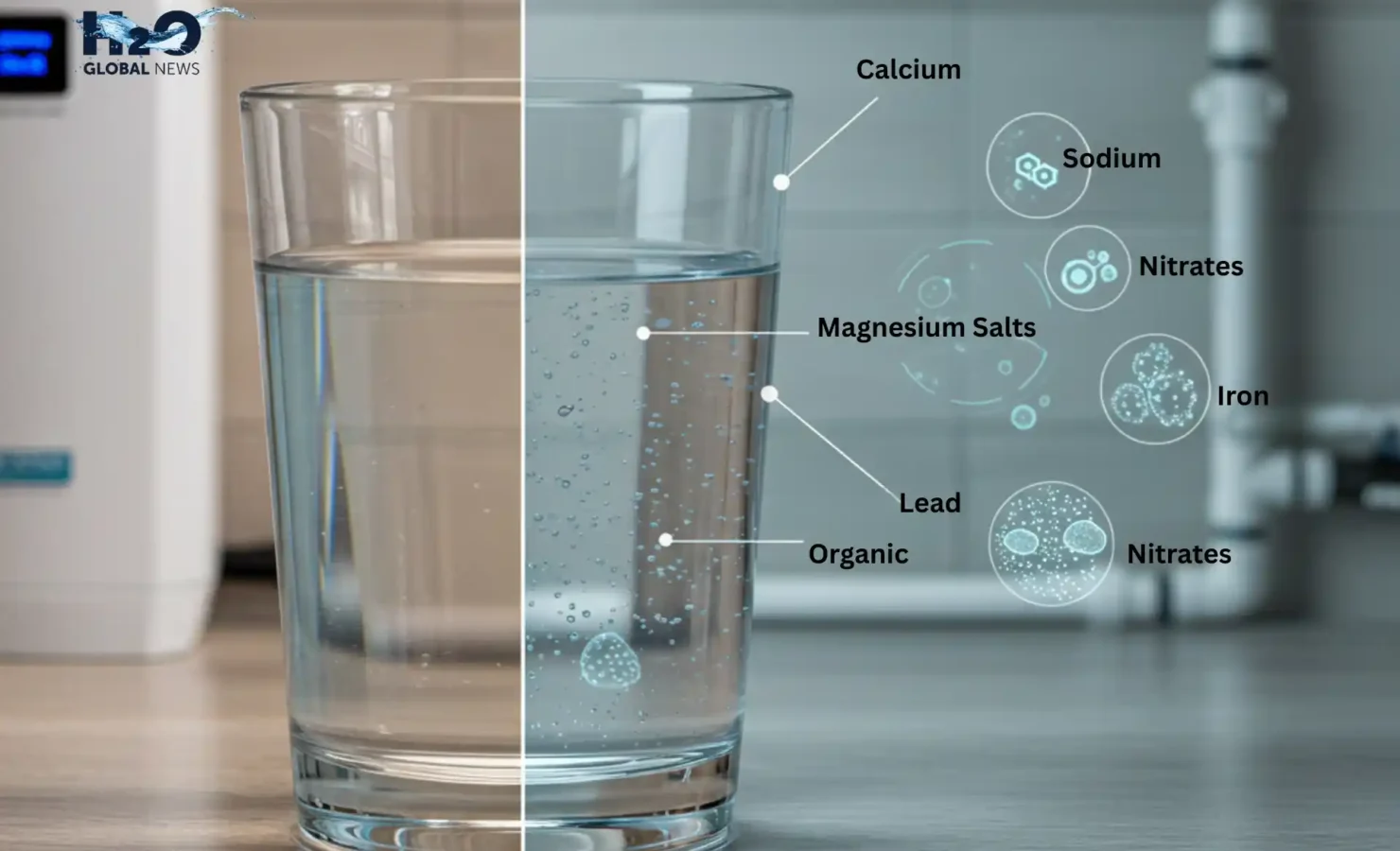
The term dissolved solids refers to minerals, salts, and other substances present in water in dissolved form. Calcium and magnesium, for instance, contribute to hardness. Other dissolved substances may include sodium, chloride, and various naturally occurring or human-influenced compounds.
Total dissolved solids, often shortened to TDS, is a general measurement of the combined concentration of dissolved substances. A TDS meter can provide a useful indication of changes in water, but it cannot identify which substances are present or determine whether the water is safe to drink. Two samples with similar TDS readings may have very different chemical compositions.
Reverse osmosis is often used when reducing certain dissolved substances is a priority. However, performance varies depending on the membrane, system design, water pressure, and the specific substances involved. If you’re concerned about a particular contaminant, look for product testing or certification that directly addresses it rather than relying on a general TDS reduction claim.
What About Harmful Contaminants?
The word “contaminant” covers a broad range of substances, and not all contaminants require the same treatment. Some affect taste or appearance, while others may pose health risks even when the water looks perfectly clear.
Potential concerns include lead from certain plumbing materials, nitrate in some groundwater supplies, microorganisms, and specific chemicals. The risks depend on the source of the water, the surrounding environment, and the condition of the plumbing or well.
Choosing a filter to reduce harmful contaminants begins with identifying which substances are actually present or reasonably likely to occur. A product’s marketing description isn’t enough. Check its performance documentation and relevant independent certifications to see whether it has been tested for the contaminant you need to address.
For private well owners, regular testing is especially important. Local public health guidance can help determine which tests are appropriate and how often they should be repeated. If a test identifies a potentially serious health hazard, consult the relevant health authority or a qualified water treatment professional before relying on a household filter.
It’s also worth remembering that no single filtration system removes every possible contaminant. In some cases, treatment may require a combination of technologies, repairs to the plumbing or well, or another corrective measure.
Choosing a System That Fits Your Home
When comparing filtration systems, begin with your priorities. Are you mainly trying to improve taste, reduce sediment, address hard water, or lower the concentration of a particular contaminant? These goals can call for very different equipment.
Consider how much water your household uses, where the unit will be installed, and whether you want to treat water at one faucet or throughout the home. Under-sink systems are convenient for drinking and cooking, while whole-house systems treat incoming water before it reaches most fixtures. The two approaches aren’t interchangeable, and some households may benefit from using them for different purposes.
Pay attention to the practical details, too. Replacement cartridges, membrane life, installation costs, water pressure requirements, and wastewater production can all affect long-term value. A system that looks inexpensive at first may cost more to maintain if its filters are difficult to find or need frequent replacement.
Ask the supplier to explain what each stage does and why it’s included. A trustworthy recommendation should connect the equipment to your water quality results, not simply offer the most expensive package available.
Maintenance Is Part of Good Water Treatment
Even a well-designed filter won’t perform indefinitely without care. Sediment and carbon cartridges gradually collect material, while membranes and other components need servicing according to the manufacturer’s instructions.
Set reminders for filter changes and keep a simple record of maintenance. If the water flow slows, the taste changes, or a leak develops, investigate the cause rather than assuming the system is still operating normally. Some problems may be as simple as a clogged cartridge, but others may require professional attention.
Follow instructions for sanitizing the system where applicable, especially if it includes a storage tank. If the equipment was installed to address a specific contaminant, periodic testing may also be appropriate to confirm that treatment remains effective.
These routines aren’t particularly exciting, admittedly, but they can make a real difference. Regular maintenance helps protect your investment and provides greater confidence in the water your family uses every day.
Make an Informed Choice About Better Water
A good filtration system should solve a real problem, work reliably, and fit comfortably into your daily routine. The best starting point isn’t the number of stages or the latest product claim. It’s understanding your water and deciding what needs to change.
Review your water test results, compare systems with verified performance information, and consider the full cost of ownership before making a purchase. With the right combination of treatment, sensible expectations, and routine maintenance, cleaner-tasting water can become a simple part of everyday life rather than another household concern.